Information
About Us
Introduction
Taiwan Contemporary Culture Lab (C-LAB) was established in 2018 and is operated by the Taiwan Living Arts Foundation under the Ministry of Culture. With “innovation” as its core principle, C-LAB is an open and diverse experimental base for contemporary culture, connecting art, technology, and different fields through creative support, exhibitions and performances, cross-disciplinary collaboration, international exchange, and education. Drawing on experiences from Taiwan and Asia, C-LAB continues to explore new possibilities for contemporary culture.
Located at Kong Zong, the former site of the ROC Air Force Command Headquarters, C-LAB is part of a site with a history spanning industrial research, military command, and cultural experimentation. Originally home to the Industrial Research Institute of the Taiwan Governor-General’s Office, the site became the headquarters of the ROC Air Force in 1950. After the Air Force Command Headquarters relocated in 2012, the site gradually opened to the public and became the foundation of C-LAB in 2018. In 2024, the Old Office Building (now the Heritage Building), the Warfare Building (now the Command Building), and 15 associated historic structures were designated as national monuments.
Today, C-LAB continues to foster cultural experimentation through sound, visual culture, cultural technology, animation, and other creative fields, while welcoming cultural professionals, technology support teams, and the animation industry to collaborate and create. With the restoration of the Heritage Building and Command Building completed in 2026, Kong Zong is entering a new phase of public opening and cultural development. Building on C-LAB’s accumulated creative energy, Kong Zong is moving toward The Kong Zong Cultural Base, with a vision centered on historic preservation, interdisciplinary development, and international exchange.
Milestones
Industrial Research Institute of the Taiwan Governor-General’s Office
During the Japanese colonial period, the Da’an area of Taipei was largely agricultural land known as “Da’an 12 Jia.” As the demand for industrial research and development in Taiwan grew, the Taiwan Governor-General’s Office reorganized the Central Research Institute in 1939, and some of its industrial research units relocated to Da’an 12 Jia to establish the Industrial Research Institute of the Taiwan Governor-General’s Office. Its research covered technologies related to everyday life, including food, fermentation, and brewing.
Number 2 Hall (now the Heritage Building) Completed
The Taiwan Governor-General’s Office originally planned to construct eight research buildings on the site as part of an important industrial research institution. Number 2 Hall was prioritized as a core experimental facility and was completed between 1941 and 1943. It is now a national monument within the site. Following the outbreak of the Pacific War, resources were redirected toward the war effort, and subsequent construction plans were suspended.
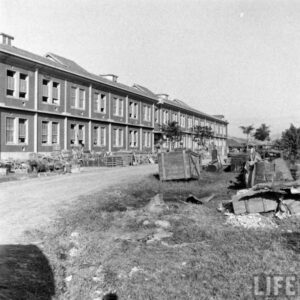 The façade and main entrance of Number 2 Hall in the early postwar period. Photo: LIFE Magazine.
The Taiwan Provincial Industrial Research Institute
After World War II, the site was taken over by the Taiwan Provincial Industrial Research Institute, which continued research in industrial and chemical fields.
Transition to Military Use
From 1948 to 1949, government agencies and personnel of the Republic of China relocated to Taiwan. With national defense taking priority, the buildings and land of the former Industrial Research Institute were transferred for military use, becoming the Ministry of National Defense’s Ren’ai Base and the Air Force Command Headquarters.
Republic of China Air Force Command Headquarters, Ministry of National Defense
In 1950, the Ministry of National Defense formally established the Air Force Command Headquarters at the site, making it the highest command authority for Taiwan’s air defense and military operations.
Taiwan Air Force Innovation Base
In 2012, Air Force Command Headquarters, MND was relocated to Zhong Yong Military Base in the Dazhi area of Zhongshan District, Taipei City. The Executive Yuan proceeded to revitalize the newly vacated site and named it “Taiwan Air Force Innovation Base” in 2015. The base was run by the Ministry of Economic Affairs to invite organizations and groups across a variety of disciplines to participate in programs of youth entrepreneurship and social innovation.

Culture Lab Preparatory Group
In 2017, the Ministry of Culture established the preparatory group for the Kong Zong Culture Lab, aiming to transform the 7.15-hectare site into a platform for the future development of contemporary culture in Taiwan. The project explored the site’s transformation from a strategic military location into a contemporary cultural space by documenting its historical context, spatial characteristics, and site narratives, with the goal of building a cultural experimental ecosystem.
Taiwan Contemporary Culture Lab (C-LAB)
Taiwan Contemporary Culture Lab (C-LAB) was officially launched in 2018 and is operated by the Taiwan Living Arts Foundation under the Ministry of Culture. As a new type of arts and cultural organization, C-LAB explores the intersections of art, culture, technology, and society beyond conventional frameworks. It engages the public through diverse exhibitions, performances, and public programs, while connecting and collaborating with organizations in Taiwan and abroad through talent development, co-production, R&D, and exhibitions and performances.
Since its establishment, C-LAB has operated the Contemporary Art Platform, encouraging experimentation in creative concepts, production technologies, and forms of presentation.
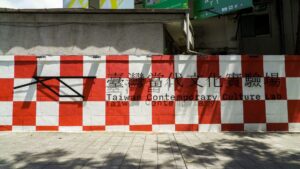
Taiwan Sound Lab
Working with the Institute for Research and Coordination in Acoustics / Music (IRCAM) of the Pompidu Center in France, the Taiwan Sound Lab is established at C-LAB, with art, science, and technology embedded at its core to promote technology transfers, musical composition, technical training, mutual site visits, research curriculum, co-production, and co-presentation.
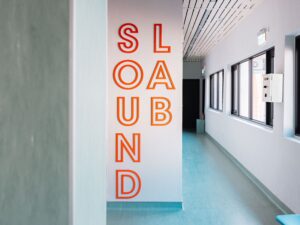
The Technology Media Platform was initiated
The C-LAB Technology Media Platform promotes interdisciplinary combination of culture and technology with focuses on music and sound culture, future audiovisual media, bio art, artificial intelligence, electronic communications, system integration, and digital humanities. It successively sets up cyber-physical integrated laboratories, brings professionals and innovative R&D energy together, matches creators and industries, supports forward-looking media experimental projects in consonance with market trends, connects with the international technological network for collaborations and exchanges, and schemes out future trajectories for the development of technology media.
Creative Base for Animators was initiated
Officially opened in 2022, the Creative Base for Animators is located in C-LAB’s Dormitory A. In the three-story building features it Motion Capture Studio, classrooms, Art Space, and offices, all spaces tailor-made for flexible use during every stage of the creative process from conception to production and distribution. In addition, C-LAB collaborates with the Animation & Visual Effects Association in providing courses and resources such as legal consulting and investor matchmaking for animation talents and industries, and with the assistance of the National Center for High-performance Computing offers the software and techniques of real-time rendering and animation special effects, building up a creative base for incubating animation industry capacity.
In 2022, the Taiwan Living Arts Foundation which is the operating organization of C-LAB was commissioned by the Ministry of Culture to administrate the Hualien Cultural and Creative Industries Park.
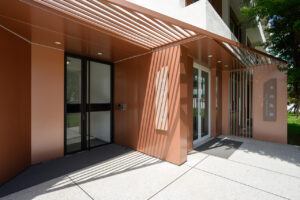
The Technology Media Platform has featured two labs of Taiwan Sound Lab and Future Vision Lab
The Technology Media Platform has featured two labs of Taiwan Sound Lab and Future Vision Lab with a view to innovating audiovisual content.
In 2023, the Taiwan Living Arts Foundation which is the operating organization of C-LAB was commissioned by the Ministry of Culture to administrate the Chiayi Cultural and Creative Industries Park.
Open C-LAB
The Taiwan Living Arts Foundation focuses on three key areas—contemporary art, technology media, and social innovation—while revitalizing the site and working with the Ministry of Culture on the restoration and adaptive reuse of historic buildings. Following their designation as national monuments in 2024 and the completion of restoration and site improvements, Kong Zong is opening to the public with a more complete vision.
Building on C-LAB’s cultural experimentation and cross-disciplinary creative energy, the site continues to foster a cultural innovation ecosystem through arts and cultural residencies, creative industry clusters, and public programs. Kong Zong is now moving toward The Kong Zong Cultural Base, creating an open public cultural space through heritage revitalization, interdisciplinary development, and international exchange.
過去是空軍總司令部,現在是以創新為基礎的文化實驗基地。©臺灣當代文化實驗場、王世邦攝影_3-1-300x200.jpg)