International Collaboration
Independent Art Spaces of Taiwan|Public Programs
The Independent Art Spaces of Taiwan (IAST) is a research project undertaken by the Hong Kong-based Asia Art Archive (AAA) in Taiwan, which aims to collate primary sources and construct a documentary archive of independent art spaces in Taiwan from the 1980s to the early 21st century. In the course of this project, C-LAB will co-organize a series of public programs with AAA, so as to expand the research results and promote multilateral dialogues. We seek to forge connections among art spaces, art practitioners, and art historians on the basis of the phased results of this project. Through public sharing and exchange in the forms of talk, workshop, and forum, we expect to stimulate discussions on the history of art spaces as well as to investigate the issues and methodologies involved in art archives in the digital age.
- 2024/10/13
Introducing the Space II Archive—and How it became a Movement
- 2022/11/26
“ET@T” in the 90s and Its Dispositif of Images
- 2024/06/30
Introducing the Shin Leh Yuan Art Space Archive
- 2024/01/20
Introducing the Up Art Gallery Archive and Sin Pin Pier Archive
- 2023/05/20
Transmuting and Expanding: Re-exploring the Art Archives of YEH Shih-Chiang
- 2022/10/23
The Fringe Land of Milk and Honey in the South—Reviewing the Development of Independent Art Spaces in the 90s
- 2023/02/10
Modes and Methods: Digitising Mrinalini MUKHERJEE’s Archive
- 2023/10/28
Institutional Self-Archiving: The Establishment and Challenges of TFAM Archives
- 2023/09/02
The Difficulties of Archives: Archive Fever in Contemporary Art
- 2023/10/14
The Archivist and the Artist as Archivist
Exhibition
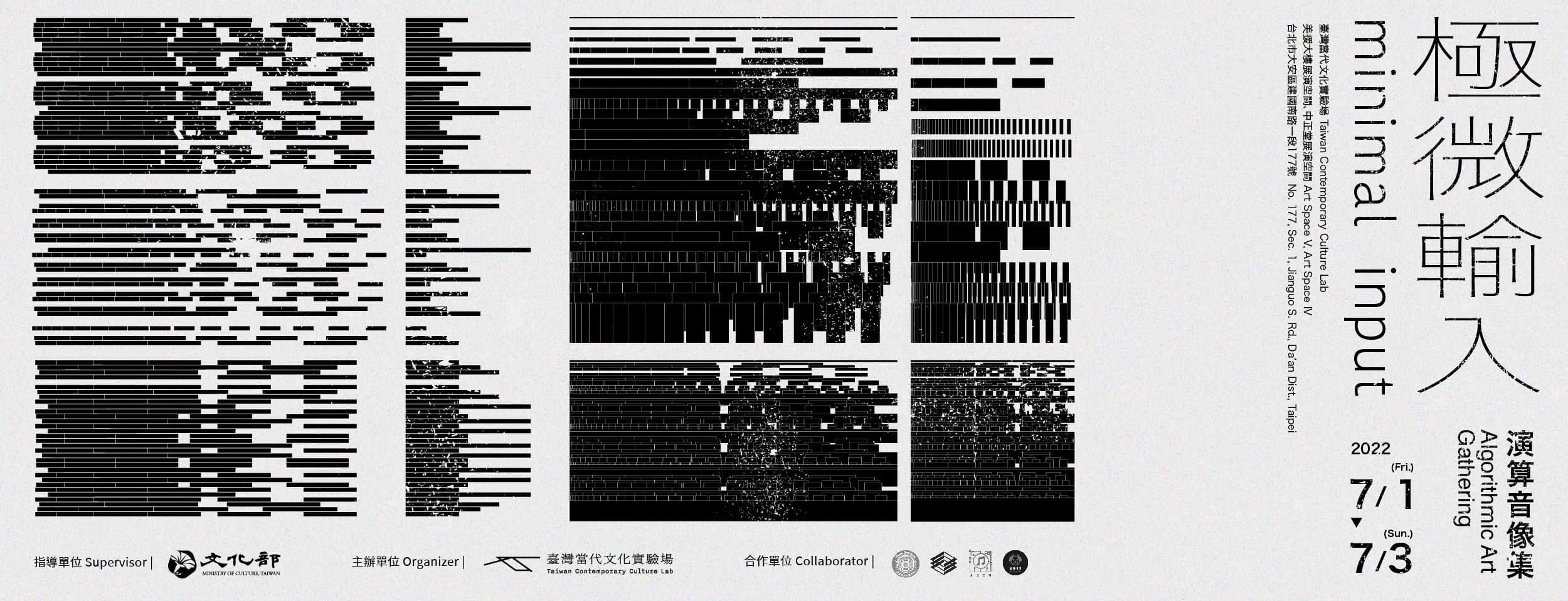
Minimal Input – Algorithmic Art Gathering
Notation and algorithms transformed sound into data, giving rise to "machinic sound" through sequencers, synthesizers, and live coding that redefines the human-technology relationship. Exploring this boundary, Minimal Input is a three-day audiovisual festival featuring algorithmic composition, generative art, and "algorave" culture at C-LAB’s Art Space V. In collaboration with Formosa Sound System and artist aka_chang, the event translates abstract data into intense physical experiences. Featuring live parties, Eulerroom online streams, screenings, talks, and a marathon performance by Atomic Swap Electronic Music, the festival showcases live coding as a transparent, improvisational performance that merges code, technology, and sound rituals.
International Collaboration
2022-2024 Taiwan and Australia Choreography Exchange Program
The Taiwan Contemporary Culture Lab (C-LAB), the Cultural Division of the Taipei Economic and Cultural Office in Sydney, Australia, and Australia’s Critical Path have been co-organizing the 2022-2024 Taiwan and Australia Choreography Exchange Program. This program is open to creators from Taiwan with a background in choreography or digital technology.
International Collaboration
Returning:Chapter2
Co-curated by the Sydney Opera House and C-LAB, Returning: Chapter 2 expands on the 2021 digital art project with works by four Australian and Taiwanese artists responding to recent global crises. Exploring autobiography, mythology, and culture through the body, music, and the virtual, the artists create scenes reflecting innocence, rage, despair, and imagination. Their provocative, open-ended works challenge viewers to critically engage with the world, offering a vision for how we return to society, each other, and ourselves. The project is supported by Taiwan’s Ministry of Culture and TECO Sydney.
Play Arts Festival
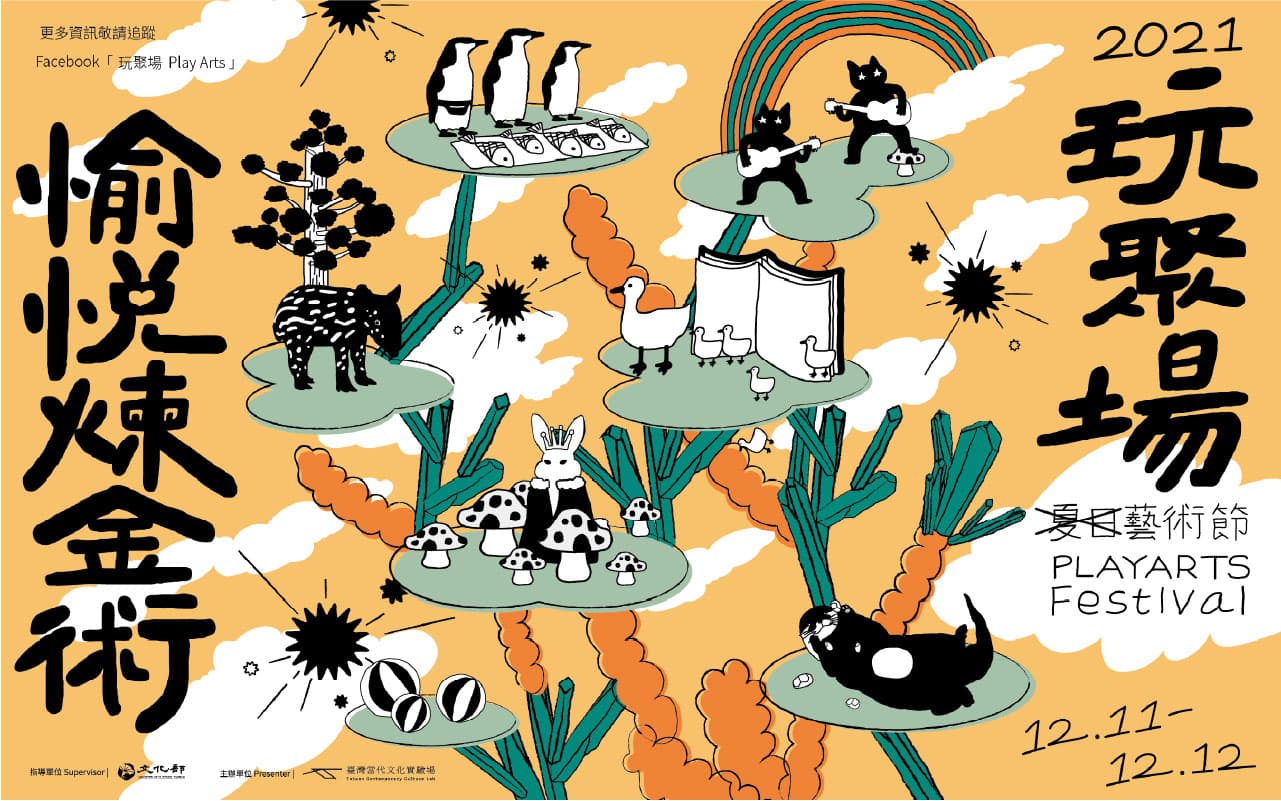
2021 PLAY ARTS Festival – The Alchemy of Joy
Adapting to the pandemic, the Play Arts Festival moves to December under the theme "The Joy of Alchemy," using performing arts to bring warmth and positivity amidst new norms. The House Peace team leads comedy-focused mission games, solos, and music, alongside curated online dance and family programs, C-LAB's Music Oasis, and site-specific circus arts. Additional highlights include theatrical marketplace auctions, artist slashie booths, and live children's broadcasts. Blending online and offline experiences, the festival invites audiences to connect from a safe distance and share its uplifting joy.
Exhibition
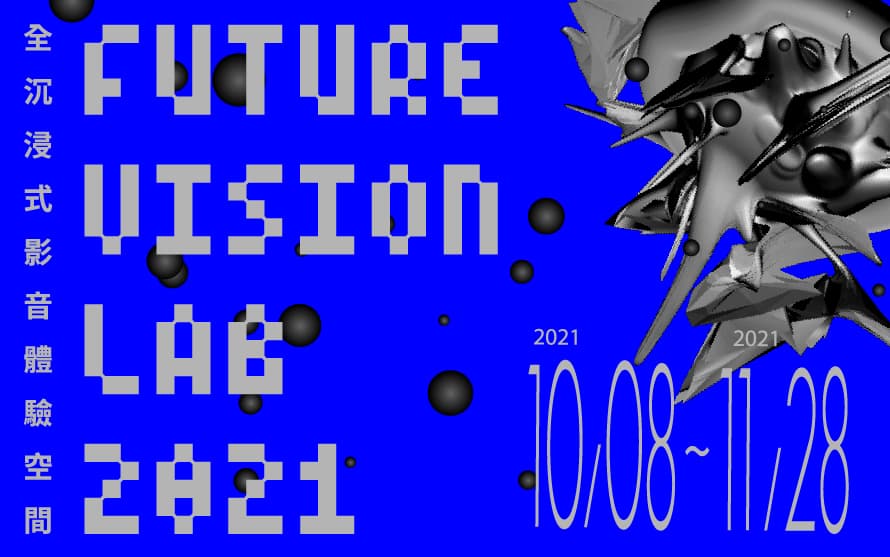
FUTURE VISION LAB 2021
「FUTURE VISION LAB 2021」,打造直徑12公尺的戶外穹頂構築(DOME)展演空間,規劃了14檔作品展演和1場講座,邀請國內外藝術家製作沉浸影音與跨域的作品,更首度開放徵件,徵選出多位新銳數位媒體創作者的作品。
- 2021/10/08
Atsushi TADOKORO-Consonance and Dissonance
- 2021/10/08
Alex GUEVARA-Transient
- 2021/10/08
Sandrine DEUMIER ╳ Myriam BLEAU -L’alter-monde
- 2021/10/29
Sandra TAVALIXWonderGym XLIN Yen-Chun-Ban Shan
- 2021/10/15
Nulls Design-On Earth Series:Dome
- 2021/10/15
XTRUX-Reincarnate Island
- 2021/10/22
TSAI Chi-HungXBlaire KO-Re-Generative:: update()
- 2021/10/24
TNUA NMA X SCCD-Immersive Audiovisual Workshop-The Joint Presentation
- 2021/11/05
Co-coism-Flesh Gods
- 2021/11/12
CHAO Pei-Yu-Concurrent of Root(s)
Exhibition
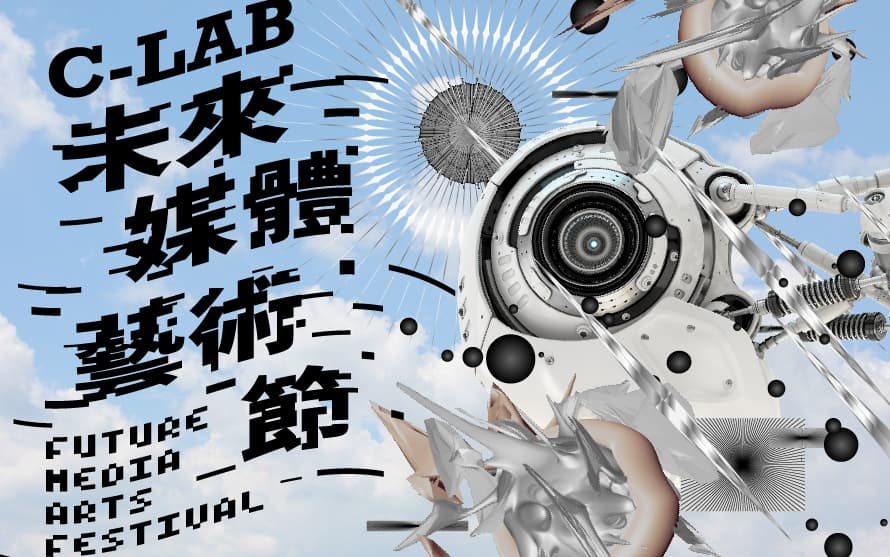
C-LAB Future Media Arts Festival
C-LAB’s "Future Media Arts Festival" runs from October 8 to November 28, 2021. Co-curated by Dar-Kuen Wu and Escher Tsai, it showcases 24 works by 23 local and international artists, alongside lectures and workshops. Running in parallel, "FUTURE VISION LAB" features a giant dome-shaped space delivering immersive audio-visual experiences. Together, these events push the boundaries of technology and creation to inspire fresh perspectives on the future of media art.
Exhibition
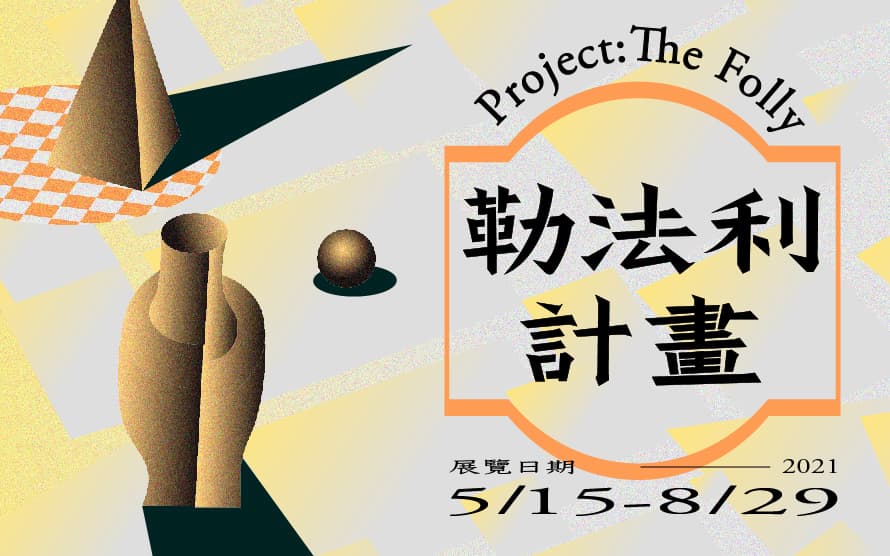
Project: The Folly
Since 2018, C-LAB has transformed the former Air Force Command Headquarters into an artistic incubator for innovative cultural experimentation. Building on previous experimental architecture projects, Project: The Folly uses the former U.S. Aid Building (Art Space V) to explore the concept of "folly" and examine human-space relations within an ambiguous, evolving historic site. Ten participating artists engage with the venue through two main approaches: CHEN Wan-Jen, TAI Han-Hong, CHIU Chen-Hung, and LIAO Chien-Chung create site-specific works that respond to the building's historical and spatial context, while WU Tsan-Cheng, LING Tien, CHEN Shiau-Peng, TSONG Pu, HSIAO Yu-Chih, and Arnont NONOYAO investigate urban systems and individual-city dynamics. By rejecting pragmatic utilitarianism, the project offers fresh perspectives on post-pandemic living and place-building.
International Collaboration
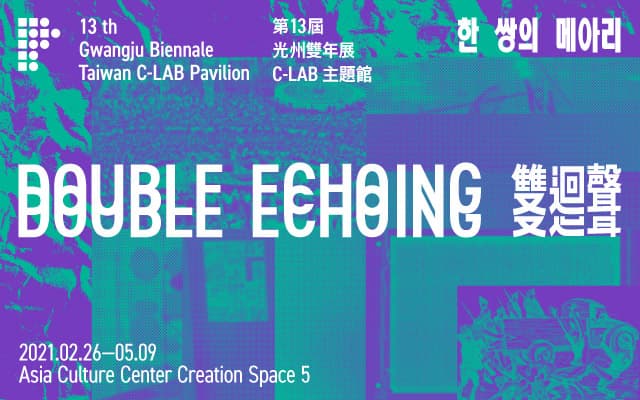
The 13th Gwangju Biennale Pavilion Project – Double Echoing
Titled Double Echoing, this exhibition explores the parallel modern histories of Taiwan and South Korea, addressing their shared experiences with war, colonization, repressive rule, Cold War alignment, and democratization. Through a cross-institutional collaboration between C-LAB, the National Human Rights Museum, and the Gwangju Biennale, 14 artists examine body politics, human rights, the White Terror, and transitional justice. Re-commissioning four works from the Green Island Human Rights Art Festival on the 40th anniversary of the Gwangju Uprising, the exhibition uses art to give voice to suppressed narratives, reflect on Cold War legacies, and envision a freer future.
International Collaboration
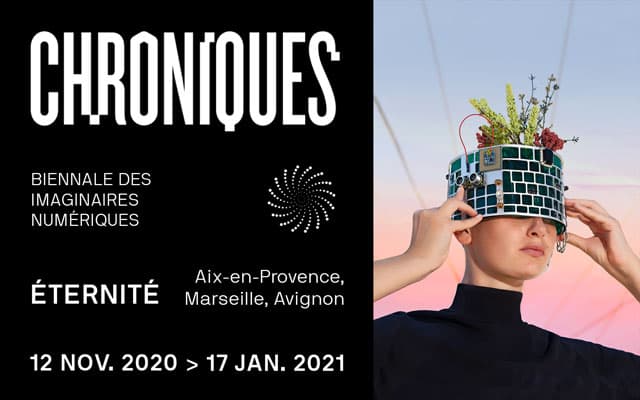
CHRONIQUES – Biennale of Digital Imagination
Taiwan has evolved from a tech manufacturing hub into a vibrant "culture and technology island." Blending technological innovation with cultural identity, Taiwanese artists leverage AI, VR/AR, and new media to address contemporary social issues. As the guest of honor at France’s CHRONIQUES Biennale, C-LAB and Kaohsiung's VR FILM LAB present 12 artists exploring the theme "ETERNITY." Through exhibitions, performances, and screenings, Taiwan showcases its cultural soft power and technological expertise, actively advancing global exchanges in media arts for the post-pandemic era.